Member Town Hall Summary
February 23, 2026
SHRM-Atlanta
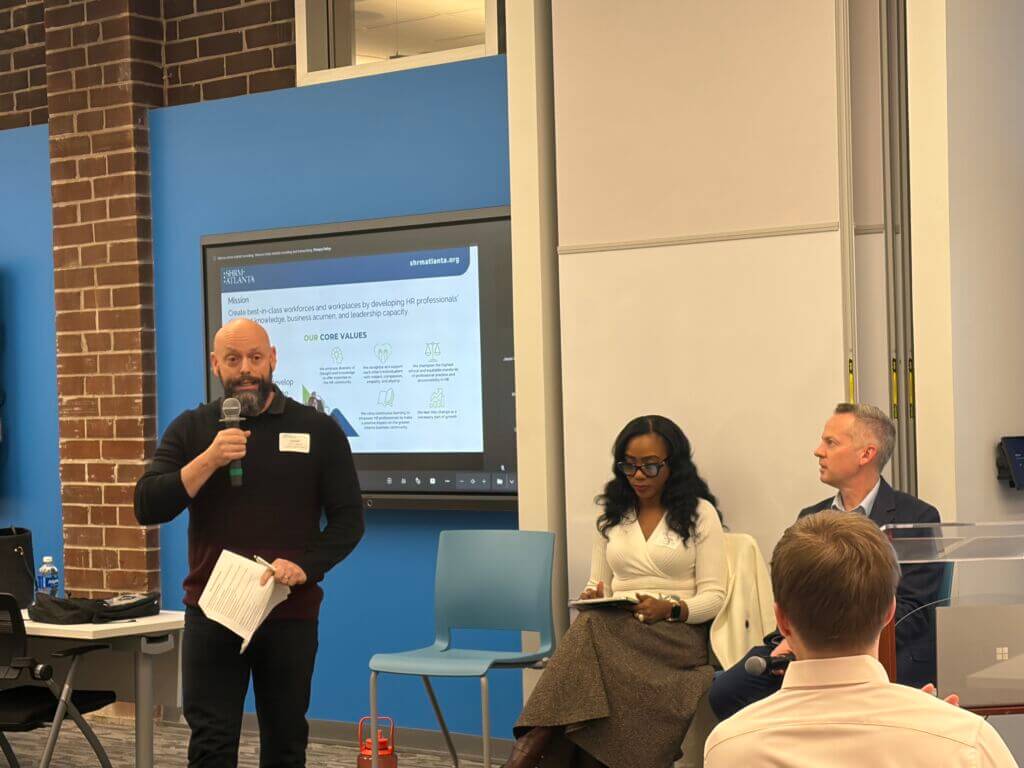 On February 5, 2026, dozens from the SHRM-Atlanta community gathered in person for a town hall in West Midtown. The purpose was simple but significant: to share where the chapter is headed strategically and to openly discuss recent changes announced by SHRM National that could shape the future of membership. More than anything, the evening was about transparency and listening.
“This conversation was not a formality; it was an invitation for members to help guide what comes next,” said Xavier Cugnon, chair of the SHRM-Atlanta Board of Directors.
Advancing HR Leadership Locally
The meeting began with a reminder of why SHRM-Atlanta exists in the first place.
“The chapter was built to serve the local HR community,” Cugnon said. “Its strength has always come from relationships, shared learning, and a sense of belonging that cannot be replicated at a national level.”
Late last summer, SHRM-Atlanta conducted a comprehensive needs assessment that drew input from more than 500 members and other participants. That feedback shaped the newly approved strategic plan.
“Members consistently said they value connection and community above all,” said board chair-elect, Dr. Teaa Allston-Bing. “They want practical professional development that helps them navigate the realities of modern HR, including increased compliance demands, evolving workforce expectations, and the rapid rise of AI and workplace technology. They also expressed a desire to elevate the strategic role of HR within their organizations and to ensure the chapter remains future-focused and locally relevant.”
SHRM-Atlanta’s new strategic plan reflects those priorities. It emphasizes strengthening community engagement, delivering real-world tools and HR technology resources, expanding local partnerships, investing in leadership development, and ensuring the long-term sustainability of the chapter.
“Several initiatives are already underway,” Allston-Bing said, “including a refreshed online community platform, the return of the HR Excellence Awards Gala, an in-person HR technology showcase, and the launch of an aspiring CHRO leadership development program.”
The message was clear: SHRM-Atlanta is committed to evolving in ways that serve its members where they are.
Changes Introduced
The second half of the evening shifted to a more complex topic. SHRM National recently announced that it will move from an optional dual membership model to a mandatory one beginning January 1, 2029. Under this model, anyone who joins a local SHRM chapter would also be required to join SHRM National. For SHRM-Atlanta members, that would mean an increase from the current $159 annual membership to approximately $458 per year, assuming membership pricing for both organizations remained the same.
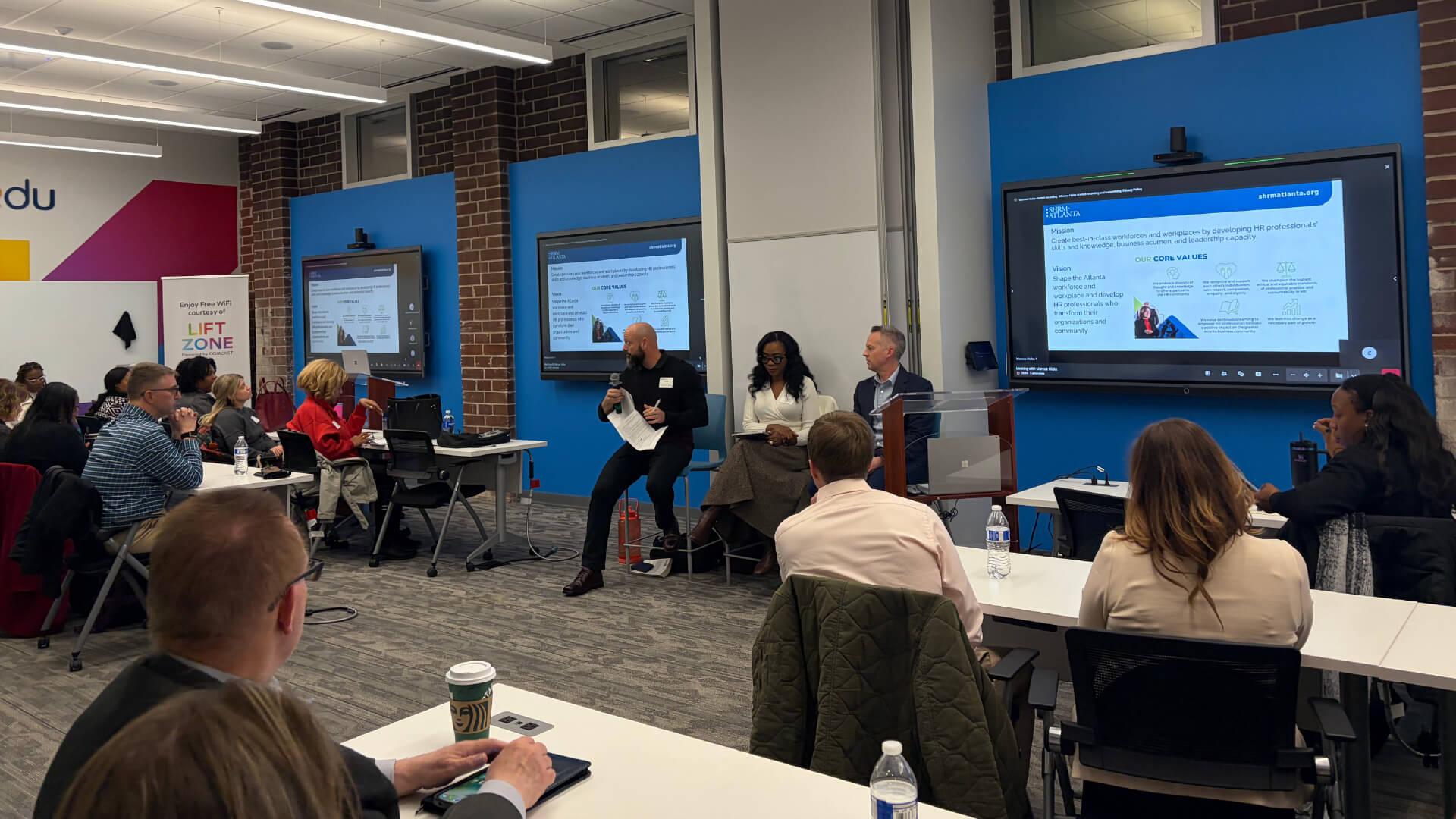 Board members walked through the background and implications carefully. Historically, SHRM-Atlanta chose not to opt into dual membership to preserve flexibility and accessibility for members. The chapter has offered multiple pricing and participation pathways, including bundled educational memberships that help members whose employers may not reimburse association dues. A mandatory model could eliminate that flexibility and significantly raise the financial barrier for many.
Beyond cost, the conversation addressed autonomy and alignment. Members learned that dual membership could trigger additional national requirements over time, such as co-branding, SHRM-hosted websites, and centralized data platforms. This raised questions about local governance, ownership of member data, and the chapter’s ability to maintain its distinct identity.
“We also acknowledge that this is not simply a financial decision but a values-based one,” said Jason Cline, CEO of SHRM-Atlanta. “The board must consider whether the chapter’s direction and voice align with the national organization’s decisions and trajectory.”
Importantly, no decision has been made.
“There is a three-year window before any mandate would take effect,” Cline said. “During that time, SHRM-Atlanta will continue gathering input and evaluating options.”
If the chapter ultimately chose not to comply with the mandatory model, it could be forced to disaffiliate from SHRM National. In that scenario, members would still be able to join SHRM National independently if they choose.
In any scenario, members would retain their individual certifications, and there are multiple ways to continue supporting recertification credits. Future chapter structures would depend on decisions made at both the local and national levels, and any shifts would likely be thoughtful and gradual.
The most powerful part of the evening came from the members themselves. Attendees expressed strong loyalty to SHRM-Atlanta because of its leadership, community, and culture. Several spoke about affordability and the risk of pricing out practitioners who already face financial pressure. Others shared confidence that the Atlanta HR community would rally behind a locally governed organization if necessary. One member even volunteered to help fund scholarships to ensure access remains equitable.
Throughout the discussion, a consistent theme emerged: people are here because of the community, not the logo. Members made it clear that what matters most is preserving the local relationships, integrity, and accessibility that have defined SHRM-Atlanta for decades.
As the evening closed, board members reaffirmed that this was the beginning of an ongoing conversation. This summary and accompanying survey is being distributed to the broader membership so every voice can be heard. The board will review the feedback carefully before determining next steps.
“The tone of the town hall was candid, thoughtful, and forward-looking,” Cugnon said. “SHRM-Atlanta remains committed to transparency, member input, and protecting the values that have shaped its success. The path forward will be guided not by assumption, but by the collective voice of its community.”